


After a turbulent election year, Nigeria is currently experiencing an economic downturn. If you run a beauty business in the country, you would have noticed the inflation-induced increase in prices of products, supplies, equipment, and utility costs. By extension, customer spending has also significantly reduced.
Nevertheless, the Nigerian beauty market is still projected to reach $9.72 billion (₦ trillion) in revenue by 2024 from $4.6 billion (₦ trillion) in 2018, with an expected compound annual growth rate (CAGR) of 13.42% for the next five years. In other words, there are opportunities for your business to grow, retain customers, and turn a profit despite economic uncertainties; you just have to know how to capitalise on them.
In this article, I’ll show you five fool-proof strategies for your beauty business to stay profitable in Nigeria during an economic downturn. But just before we get to it, let’s look at the first thing all beauty entrepreneurs must do.
First things first: plan for economic downturns

The best time to plan for an economic downturn in Nigeria is when business is going great. This way, you can rigorously consider how to handle future financial challenges without feeling rushed or desperate.
Don’t let your optimism cause you to hope recession won’t happen or think, “It can’t be me.” Plan for it anyway, in case a recession eventually happens or “it’s indeed you.” While you hope for the best for your business, always plan for the worst.
Pay strict attention to your business’ finances, and audit everything. Take note of your assets and any debt you may owe. Determine how much operating capital you have and how long it can sustain your business during an economic decline.
Lastly, draw up practical strategies to deploy if your business hits predetermined negative milestones, such as a significant percentage increase in the cost of products or a consistent drop in monthly profit.
Let’s look at practical strategies to help you thrive in the current economic climate.
5 strategies to stay profitable during the economic downturn in Nigeria
Many beauty entrepreneurs can run and even grow businesses in a thriving economy. But beauty businesses can be left unprepared when recessions hit, causing many to close shop.
The following five tips steps will make your beauty business stay profitable despite any economic downturn in Nigeria:
Strategy 1: Enhance operational efficiency

The phrase “time is money” especially holds in the beauty industry. There are a lot of demands on you and your employees’ time, from recommending products and rendering services to keeping track of the inventory and managing appointments. It can affect business efficiency and, consequently, its profit-making capacity.
Beauty businesses can now significantly reduce administrative work and downtime thanks to technological advancements.
During an economic downturn in Nigeria — but preferably before — automate aspects of your business like appointment booking, reminder sending, inventory tracking, payment processing, etc. It’ll allow you and your staff more time to focus on other critical parts of your business, like filling up appointment slots, enhancing customer experience, and exploring new revenue streams.
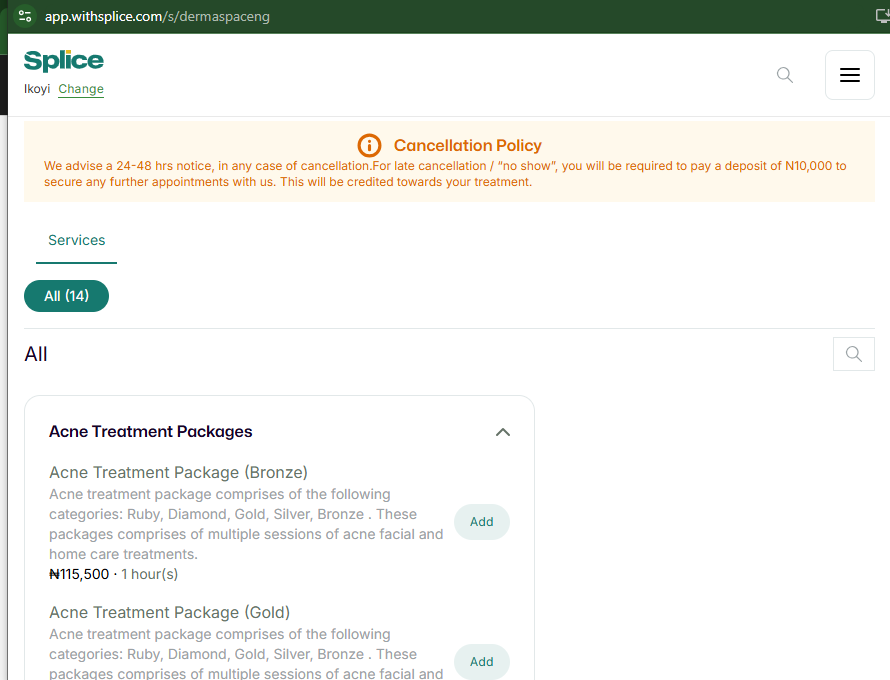
Here are a few features on Splice, the industry’s all-in-one beauty management solution in Nigeria, that can help boost operational efficiency during tough economic times:
- 24/7 appointment booking window. Save your customers valuable time by letting them book appointments online anytime. And just as simply, customers can cancel (forfeiting a percentage of their booking fee) and reschedule as needed.
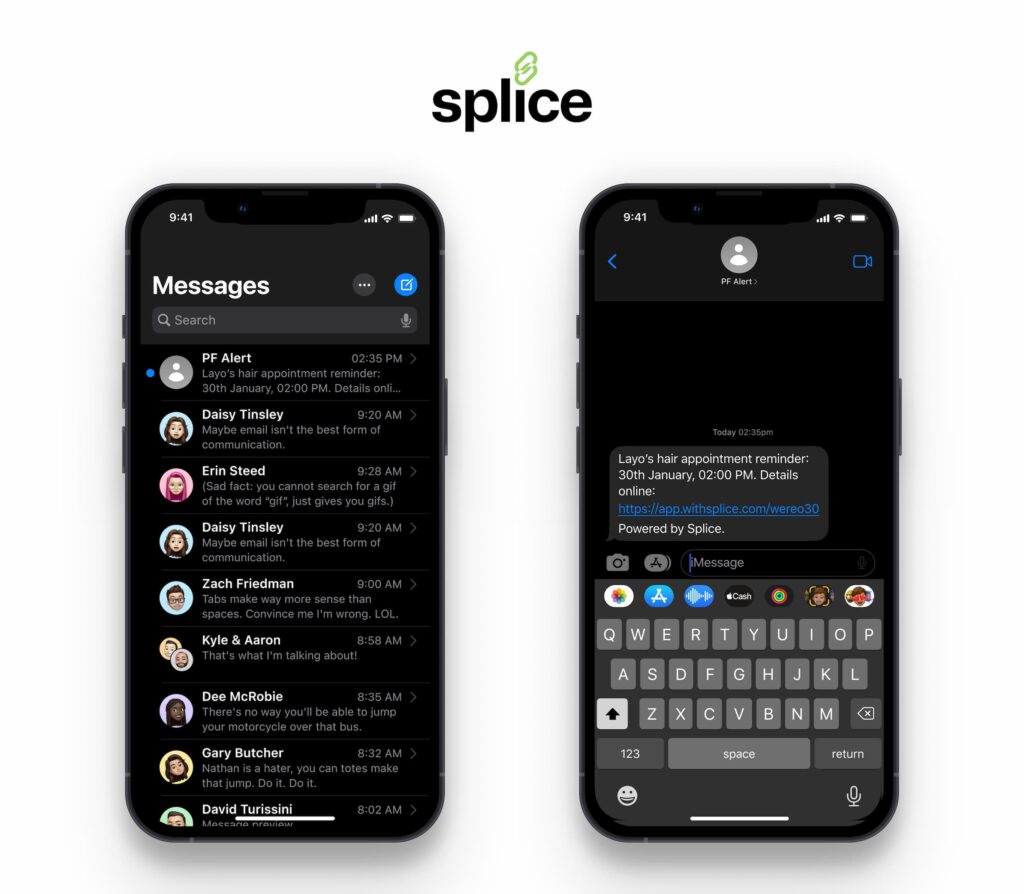
- Automated reminders. Reduce no-shows by helping your customers keep to their appointments. Splice will automatically send follow-up reminders via text and email without any input from your staff.
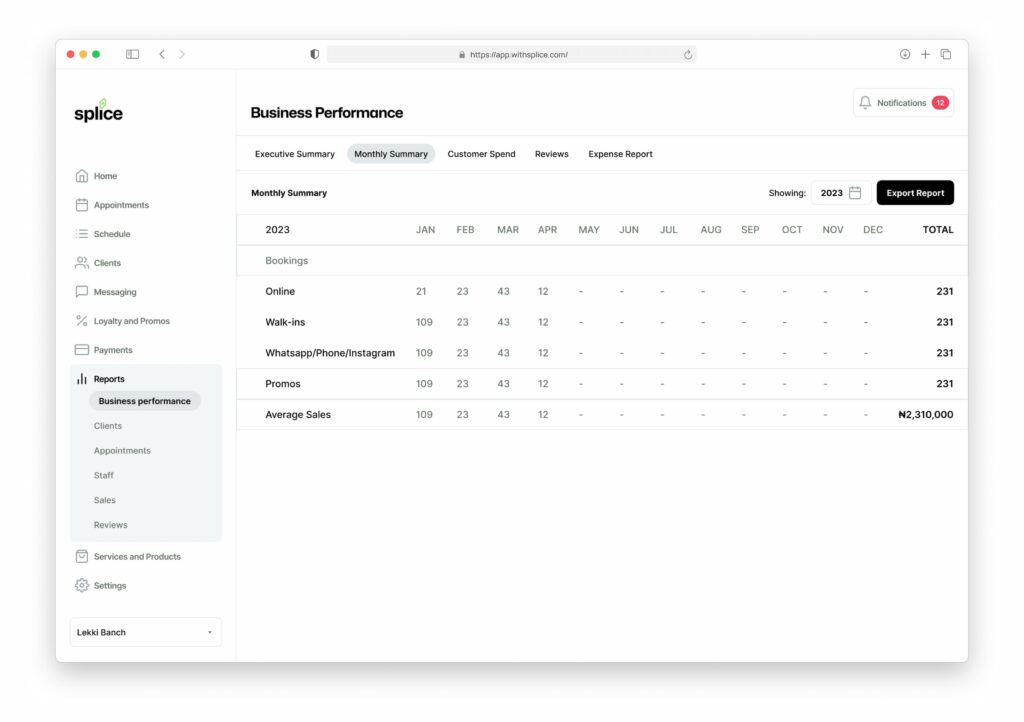
- Reporting and Insights. Get an overview of your business performance, including financials, staff, and customers, which can aid you in making data-driven decisions.
Strategy 2: Reduce expenses
Now, if you’re still in business amidst the current economic downturn in Nigeria, you clearly haven’t been throwing money around. That said, there are still some aspects of your business where you can cut down on expenses to extend your financial runway.
Financial runway describes how long a business can keep operating without running out of funds. You should have enough cash to run for at least three months at every point.
Here are some cost-cutting tips to consider:
- Trim your marketing budget. It’s time to reduce the amount you spend on ads and influencers and focus on retaining the customers you already have. Grow your customer base through excellent customer service and effective loyalty programs. Six to seven in 10 customers stick with beauty and wellness businesses after they receive a reward.

Splice can help you create and manage your loyalty program, automating rewards like discounts, cashback and free products for your customers.

- Maintain cash flow. Now isn’t the time to tie up your money, restocking products that take time to sell out. Restock only fast-selling products when they get low.
- Contact vendors. Reach out to your suppliers to renegotiate prices or their competitors to see if you can get a better deal.
- Review staff performance. Having to let go of employees who aren’t meeting expectations is always difficult. Unfortunately, there may come a time when it becomes necessary to cut operating costs.
- Review your utility costs. Assess amounts spent on phone, Internet, water, electricity, and cleaning. Find ways to cut costs.
All these measures might seem small, but these little savings add up after a while.
Strategy 3: Help your staff
Times are tough, affecting not only your business but also your staff. Since you need your employees to be more efficient and productive than ever to help your business weather the recession, supporting them through these challenging economic times is essential.
Here are effective ways to assist your staff and boost their morale:
- Listen to them. Your employees are most likely struggling with financial, emotional, and interpersonal strains outside of work due to the inflation. Reassure and encourage them to come to you with any concerns, and assist them in any way you can.
- Offer intangible perks: Recognise their achievement and reward them accordingly with bonuses, discounts, flexible scheduling, and paid time off.
- Provide growth opportunities. Train your staff frequently to keep them up-to-date on industry trends, beauty techniques, and technological advancement, ultimately fostering professional growth.
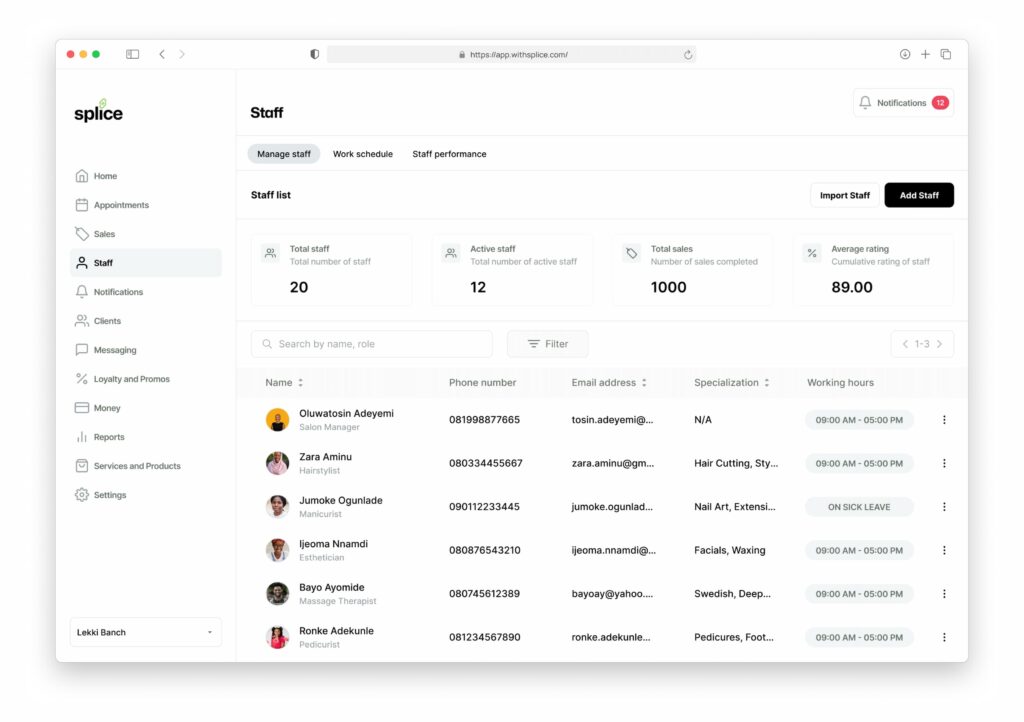
- Automate staff scheduling. Use Splice to streamline scheduling for your staff, reducing their workload so they can focus on serving your customers.
Strategy 4: Boost your online presence
A comprehensive online presence is a must-have for your beauty business because that’s how most of your potential customers interact with the world and, by extension, your business. It’s imperative during an economic downturn as it gets your business exactly where it needs to be — in front of existing and potential customers.
Just taking your business online is not enough. The challenge for most beauty businesses is sustaining it through frequent posts and engagement with the community (e.g., responding to comments and answering their questions).

From sharing positive reviews on your website and showcasing your expertise on social media platforms like Instagram, Facebook, and LinkedIn to encouraging customers to leave reviews on your Google Business Profile, a robust online presence is a vital tool that allows your customers a quick, convenient path to discovering and booking your service.
Related post: How To Set Up A Google Business Profile (formerly Google My Business) For Your Salon And Spa in Nigeria
Strategy 5: Update your pricing strategy

If your business is battling inflation, your customers are most likely facing the same challenge. Usually, the consequence is that people tend to become more cautious with their spending. While your business, on the other hand, may have to increase prices.
So, how do you ensure your increased prices don’t scare off your cost-conscious customers?
Do the following:
- Keep your customers in the loop. Communicate the reasons for the price increase to your customers, explaining any external factors, such as inflation, that necessitated the adjustment. Transparency builds trust.
- Add value to your offering. Emphasise the additional value or benefits that justify the higher prices if available. Highlight any improvements in product quality and customer service.
- Increase prices gradually. The approach allows customers to adjust to the new pricing structure, reducing the likelihood of sticker shock. It’s also a great way to gauge customer reactions to inform future adjustments.
- Provide useful perks. Offer strategic discounts or promotions to lessen the impact of higher prices on your customers.
- Sell packages: Bundle complementary services at relatively lower prices to encourage customers to book again or try a new service. The approach makes customers feel that they are getting more for less money.
For example, instead of selling manicures for 9,000 and pedicures for 9,000, bulk the two under a custom package and charge 15,000, saving interested customers 2,000.
Conclusion
Recession can be brutal, especially for unprepared beauty businesses. However, the right strategies can help you stay profitable despite any economic downturn in Nigeria. This guide contains some of the time-tested strategies you can use to make your beauty business recession-resistant.
As you secure the future of your business, let Splice help you boost operations efficiency and enhance customer satisfaction.


