


Customers pride themselves on being logical. Beyond product and service features, they need a solid reason to patronise and stick with you — considering all the options that tend to be available. Building a customer loyalty program is an excellent way to give them that reason.
A customer loyalty program is a system for rewarding your customers to incentivise them to keep doing business with you.
For instance, an annual spa membership fee of ₦575,000 at ORÍKÌ grants access to specialised treatments and perks. Members can enjoy free massages on their birthday, free monthly manicures & pedicures, and a whopping 10% discount on facials, massages, body scrubs, and all ORÍKÌ products, among other perks.
While many businesses in Nigeria might struggle to get customers to return, businesses like ORÍKÌ with customer loyalty programs will statistically find it easier to secure repeat customers and even land new ones. 3 out of 4 customers will return to patronise a business after receiving an incentive.
In this blog post, I’ll take you through the step-by-step process of creating a customer loyalty program in Nigeria. But before that, I’ll also explain what it means, show you how it works, and explain why you should use it for your business.
What is customer loyalty?
Customer loyalty is the measure of how likely a customer is to continue patronising your business after their first visit. A loyal customer will repeatedly choose your business over others offering the same thing.
What are customer loyalty programs?
Customer loyalty programs, also called rewards programs, are initiatives that help you offer rewards to your customers as incentives to continuously patronise your business. It’s a customer retention strategy that encourages your customers to keep picking you over your competitors.

The rewards can be discounts, cashback, free products or services, early or exclusive access, and more. Now that you know what they are, how exactly do they work?
How do customer loyalty programs work?
Loyalty programs in Nigeria work much like anywhere else in the world. Businesses reward customers to encourage them to not only patronise but become repeat customers. The general purpose is to reward them for choosing you and retain their continuous patronage.
There are different customer loyalty programs, as you’ll find out later in this article. But the general process is the same, and it goes something like this:
- First, the customer buys a product or a service from a business for the first time.
- The business prompts the customer to join its loyalty program.
- The customer joins the program by submitting basic information, such as name, email and phone number.
- Lastly, the customer receives rewards based on the loyalty program’s conditions, such as referrals, purchases, visits, etc.
Now that you understand how it works, the question remains: Does your business need one?
Why should you create a customer loyalty program?
A relationship is more likely to last long and be successful when all parties feel like they are benefiting from it. A business-customer relationship is no different.
When your customers patronise you, they’re giving you their support. Rewarding your customers with anything from discounts to freebies gives them something in return. They will feel seen and appreciated, making them a lot more likely to return in the future.
Launching a customer loyalty program can feel challenging at first as it entails providing valuable rewards, which will initially have an impact on your profit margins. But the long-term benefits are undeniable.
Benefit 1: Stronger customer relationships
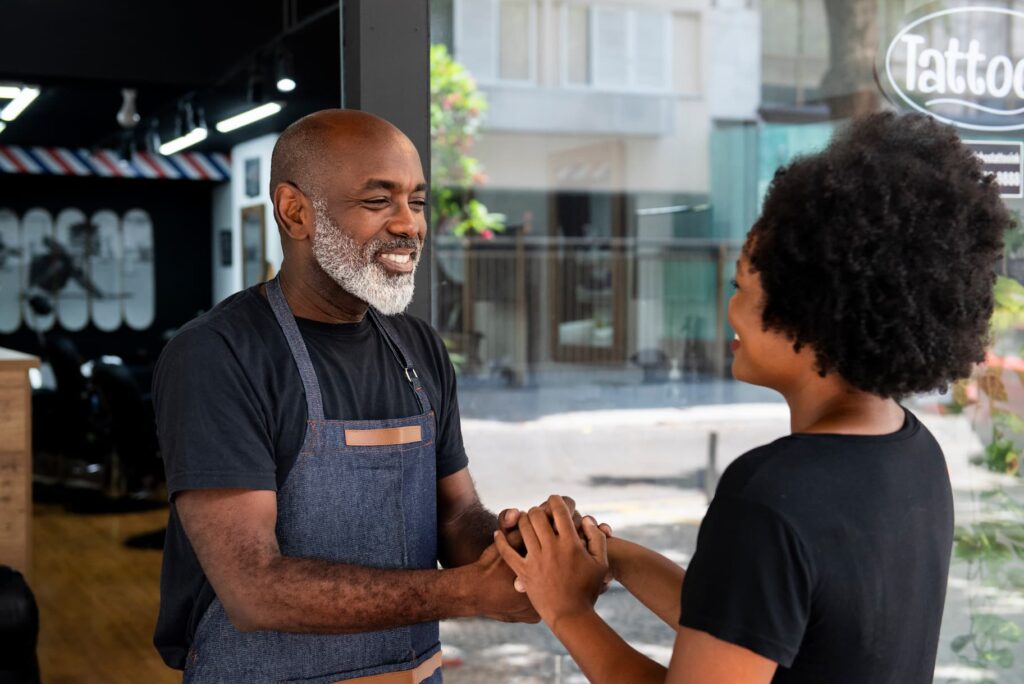
When a customer patronises you, their experience with your brand is a factor that determines whether they’ll return. A customer loyalty program is a perfect way to improve these experiences, build trust, and improve customer relations.
Benefit 2: Better customer retention
Rewarding your customers for their patronage is an effective way to keep them returning for more. It’s essentially you thanking them for their business. Who doesn’t want to stay where they are appreciated?
Benefit 3: It’s cost-efficient
It’s cheaper to retain existing customers than to find new ones. This is true whether you run a neighbourhood spa or manage a multinational cosmetic brand.
Acquiring a new customer will cost you five times more than retaining a current one. By increasing customer retention by just 5%, you can boost profit by up to 95%. What’s more, you have a better chance of upselling to a customer you already have than selling to a new one.
Benefit 4: Improved brand dominance
Running a customer loyalty program puts you ahead of businesses that do not have one. By rewarding your customers, you give them something tangible they can’t get from your competitors. Brands that have loyalty programs grow revenue 2.5 times faster than the ones that don’t.
Benefit 5: More customer referrals

A loyal customer is four times more likely to refer others. Customer loyalty programs encourage word-of-mouth marketing. An example is the refer-a-friend loyalty program, where you reward a customer every time they bring you another customer. They’ll tell their friends, family, and anyone about your business.
Now that you know the importance of loyalty programs to your business, it’s time to see the various types.
Types of customer loyalty programs
There are several types of rewards programs that your business can use to build customer loyalty and earn repeat business.
Here are eight of them:
- Points-based customer loyalty programs
- Tier-based customer loyalty programs
- Mission-based customer loyalty programs
- Paid customer loyalty programs
- Spend-based customer loyalty programs
- Refer-a-friend customer loyalty programs
- Gaming customer loyalty programs
- Cashback customer loyalty programs
Now, let’s go through them one after the other.
#1. Points-based customer loyalty programs
These programs let repeat customers earn and accumulate points whenever they engage with the brand. Engagement could mean purchase or participation in brand activities. Businesses usually give customers a way to track their points, pending when they can redeem them for cash, freebies, discounts, perks, etc.
A Nigerian business that uses a point-based loyalty program is PiggyVest, which offers customers points they can turn into cash.
#2. Tier-based customer loyalty programs
Businesses that run these reward programs offer different customer benefits depending on their levels. Your business could rank customers into different categories depending on set criteria, such as number of referrals, amount spent, number of monthly visits, etc. Customers who meet this criteria can unlock a new level with access to additional benefits or perks.
The purpose of this loyalty program is to encourage your customers in lower tiers to do more to get to the top tiers, where they will get more rewards. Typically, the more exclusive the perks, the greater the customer appeal.
A Nigerian business that uses the tier-based customer loyalty program is Jane’s Haven Beauty Spa, which offers Silver, Gold, and Platinum tiers.
#3. Mission-based customer loyalty programs
These are also known as value-based loyalty programs. Away from offering points and grouping into tiers, these loyalty programs focus on causes that resonate with you and your customers. Loyalty programs on shared values help you connect with your customers.
Some brands even let their customers convert their points to donations to their preferred charities. A perfect example is Eden’s mission to share 1,000 meals by donating ₦500 from every meal purchased.

#4. Paid customer loyalty programs
Also known as fee-based loyalty programs, these reward programs are popular in the beauty industry. They offer customers immediate and ongoing access to benefits for a fee. These payments can be one-time or recurring (subscription loyalty program). Brands often combine with tier-based programs so that customers can pay depending on the category.
An example is ORÍKÌ Spa Membership, which requires customers to pay ₦575,000 annually to access the benefits.
#5. Spend-based customer loyalty programs
In these programs, high-spending customers are recognised and engaged with more personalised offers and perks. The goal is to retain and encourage them to spend more. MTN Nigeria runs a spend-based program called Prestige Lounge. It ranges from Bronze to Yellow with a minimum annual spend of ₦60,000 and ₦1,200,000, respectively.
#6. Refer-a-friend loyalty programs
Here, existing customers get to refer their family, friends, or anyone else and get rewarded for their efforts. Through word-of-mouth marketing, these programs turn your loyal customers into fervent brand advocates. That’s not all. The referred customers can also refer other customers in the future.
It will effectively reduce customer acquisition costs by leveraging the trust of existing customers. A good example is Reward for Two by ALAT by Wema: for every person you refer, they reward you with ₦500.
#7. Gaming customer loyalty programs
These let businesses gamify rewards for customers, infusing the buying process with competitive fun. Spin the Wheel, which allows the customers to play for a prize, is a favourite game in these programs. Customers can spin a virtual wheel and stand a chance of winning anything from freebies to discounts. MTN Nigeria’s Spin N Win is a great example.
#8. Cashback customer loyalty programs
Businesses that run cashback reward programs give back to customers some or all of the money they spend with the business. Even though customers are spending money, they feel good about getting some of it back. This type of loyalty program is popular among betting and financial companies. An example is Sportybet’s Sporty Saviour.
A step-by-step guide on how to build customer loyalty programs in Nigeria
Now that you’ve learned about the various customer loyalty programs with examples of notable brands, you’re one step away from starting one for your business.
Next, let’s see how to build a loyalty program for your business.
Step 1: Set your program goals

Every reward program has two main objectives: One, to motivate new customers to become repeat customers, and two, to ensure that repeat customers stay for as long as possible. The first step when you want to build a customer loyalty program is to determine how you want to achieve these for your business.
What consumer behaviours can you encourage to achieve your objectives?
It could be promoting a new salon product or service, encouraging online appointment bookings, getting your customers to commit long-term, or increasing the number of customer visits.
Furthermore, ensure your goals are SMART — Specific, Measurable, Achievable, Relevant, and Time-bound. For example, don’t just write, “I want to increase online bookings.” Instead, write, “I want at least 70% of salon appointments to be from online bookings by the end of the first quarter of 2024.”
Step 2: Understand your target customers
Once you’ve set your SMART goals, the next step is to determine whether your loyalty program should cater to old customers, new ones, or both. You can use customer data to gain insight into their preference. With all this information, you’re almost ready to craft an effective loyalty program for you and your customers.
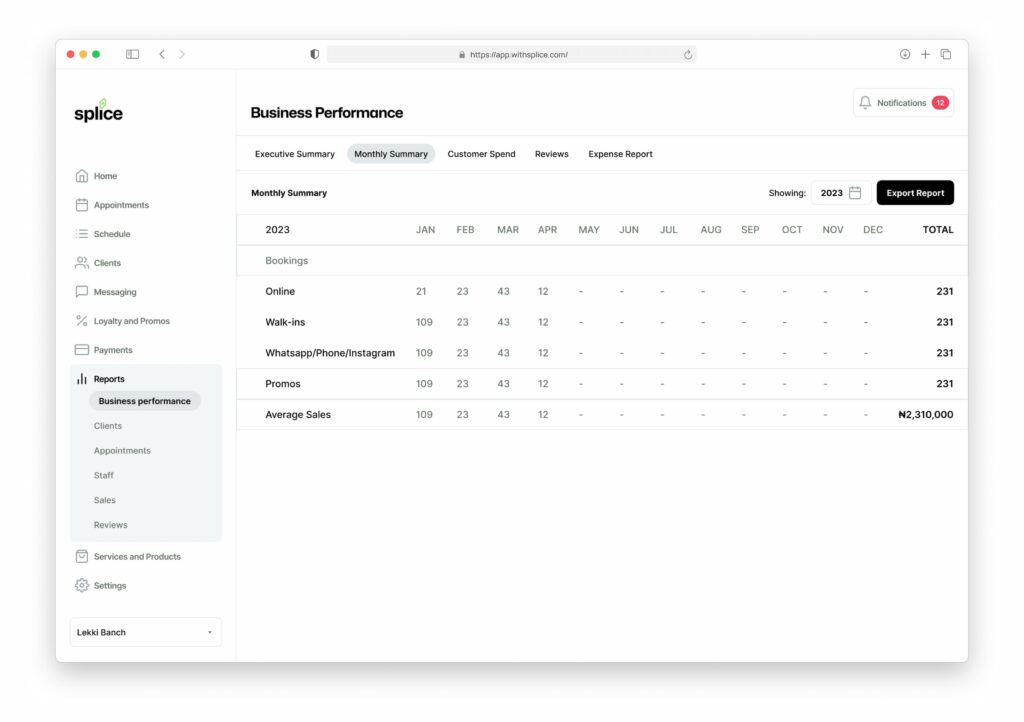
Splice has an advanced reporting and insights feature that will give you a comprehensive overview of customers’ activities, basic information, etc., to help you simplify this step.
Step 3: Plan your budget
While your loyalty program will benefit your business in the long run, it will cost money to implement it. Write an estimated budget of what it’ll cost your business to get this program off the ground and run it subsequently. Think of this budget as a customer development and retention investment.
Step 4: Select the right rewards

Next, choose desirable rewards for your loyalty program based on your understanding of your target customers and knowledge of your budget. The rewards must be something your customers will find valuable; otherwise, it’s useless. It could be anything from discounts and freebies to cashback and exclusive access.
Step 5: Choose from the types of loyalty programs
Steps 1 to 4 have led to this point. You must now pick the type of customer loyalty program that meets three fundamental criteria:
- Align with your goals.
- Fit your budget.
- Feature valuable rewards.
Check the previous section of this article for a comprehensive breakdown of the types of customer loyalty programs. You can run a hybrid program — two loyalty programs.
Step 6: Determine how you’ll run your loyalty program
After choosing the type of program, the next step is to decide how you want to run the loyalty program: manually or automatically with software.
Manual implementation requires you to track customer interactions and reward them by yourself. You’ll need materials like a notebook and physical loyalty cards, etc. While this implementation method is free, the challenge is that it’s cumbersome, heavily prone to human errors, and time-consuming.
But with automated software like Splice, you can automatically create and implement any loyalty program. Splice can track details like purchase history, total money spent, and other parameters to reward loyal customers accurately without hassle or errors. Additionally, the software can keep tabs on customer data like birthdays and anniversaries to personalise loyalty programs.

This way, you rid your loyalty program of paperwork drudgery, reduce human errors, increase implementation speed, and save precious time.
Step 7: Promote your loyalty program
Once your loyalty program is running, what’s next is ensuring your target audience knows about it. You can market it via website advertisement, email marketing, in-store physical advertising, social media marketing, paid advertising, word-of-mouth marketing, and in-software messaging — Splice offers this feature.
Step 8: Review your loyalty program regularly
Lastly, you have to monitor the performance of your loyalty program, measure it to see if it’s working, and modify it where necessary. It can be a monthly, quarterly, or yearly review. Gather insight from your chosen loyalty program software and check how your goals are coming along.
Conclusion
A customer loyalty program is more than just a marketing gimmick; it’s a strategy to sustain your business. When executed effectively, it becomes an investment in the long-term success of your salon or spa, a way to reassure your customers that they are the centre of your business.
And as Chip Bell wrote:
Your customers will stick with you and even bring their loved ones if you give them a good reason. A customer loyalty program is a great reason. Splice can help you create and manage an effective customer loyalty program for your business.


