

Running a hair salon business in Nigeria is the ghetto. It comes with several challenges and considerations. But why let that stop you?
Establishing your beauty business on a solid foundation is your best shot at thriving despite these challenges. That’s why going through a comprehensive guide like this one on how to set up a hair salon in Nigeria is essential before you start yours.
In this article, I’ll walk you through the steps and strategies for launching a successful hair salon business in Nigeria, complete with a hair salon business plan template and equipment checklist — both FREE. I’ll show you two questions you need to answer before you launch your business.
But before we begin, let’s see what the term “hair salon” means within the beauty industry and how it differs from a barbing salon.
What’s a hair salon business?
A hair salon is an establishment that provides predominantly women with hair-related products and services. Hair salon products range from shampoos and conditioners to hair extensions and colours. The services can include hairstyling, chemical treatment (hair colouring, permanent wave or perm, hair rebonding), wig revamping, and hair cutting. Some hair salons even offer hair and scalp treatments.

A hair salon that goes beyond just hair care to provide other beauty services like nail care, skin care treatments, and makeup application is known as a beauty salon. See the difference between hair salons and beauty salons in Nigeria.
Hair salon or barbing salon: are they the same in Nigeria?
Before we get to the step-by-step breakdown of how to set up a hair salon in Nigeria, let’s quickly clarify the common confusion between hair salons and barbing salons in Nigeria.
While hair salons offer hair care services to predominantly women, barbing salons primarily cater to men.
You can check out our comprehensive guide on how to start a barbing salon in Nigeria.
Key questions before starting a hair salon in Nigeria?
Answer these two questions before you open your hair salon business.
1. Do you plan to run the hair salon by yourself?

If your answer is no, skip this question and move to the next one. Otherwise, you need to acquire the necessary skills to run your business. You can opt for one of two options.
Option one: Train to become a hairstylist
This is a common way hair professionals acquire hairdressing skills in Nigeria.
It requires you to apprentice in a training institution like Lush Hair Professional School or learn under experts for usually six to 24 months. During the training, you’ll learn everything from handling hair salon equipment to running a profitable business. You’ll be ready to launch your hair salon by the end of your apprenticeship.
Option two: Train to become a manager
You don’t have to be a hairstylist to become a manager, although it helps. However, you need to master how to manage a hair salon to achieve success. The experience from previous management ventures can come in handy here. However, acquiring business know-how is crucial if you’ve never run a business. You can seek advice from established hair salon owners (or managers), take an online course (like this one on Udemy), or do both.
2. Do you want to hire an expert to run things?

This is the most efficient option for you as a business owner without the time or bandwidth to manage your salon by yourself. Simply hire an experienced manager to stay on top of things. Then, you or your manager can proceed to employ the other staff, including hairstylists and front desk personnel. Check “Step 6” in this article for more.
How to set up a hair salon in Nigeria [a step-by-step guide]
It’s important how your business begins because it sets the tone for how smoothly it’ll run. Here’s how to start your hair salon right:
Step 1: Comply with all the legal requirements in Nigeria
Government interference can slow down your business. To avoid this, comply with all relevant regulations in the country. Start with the major ones.

Register your hair salon name with the CAC
As soon as you settle on a name for your hair salon, register it with the Corporate Affairs Commission (CAC) and get a certificate to make things official.
Don’t launch your salon until you register it with the government. Otherwise, your business won’t exist as a legal identity, which can cause you to lose out on benefits like business protection, corporate account eligibility, loans and grants qualification, and credibility with investors or customers.
Follow our step-by-step guide on how to register your business name in Nigeria to register your hair salon.
Acquire your TIN from the FIRS
TIN stands for Taxpayer Identification Number. It’s a unique identification number assigned to registered businesses by the Federal Inland Revenue Service (FIRS) for tax purposes. As a business in Nigeria, you have to acquire your TIN from the FIRS and fulfil your tax obligations as and when due. It’s advisable to do this to avoid paying heavy fines.
Obtain relevant permits and licences
Get a fire safety certificate from the state fire service and an environmental permit from the Federal Ministry of Environment or State Environmental Protection Agencies (SEPA).
There might be other requirements, depending on where you want to open your business in Nigeria. Check with your local government authorities for other permits required to operate a business and comply accordingly.
Buy only NAFDAC-approved products
Confirm that all the hair care products you sell or use at your salon are approved by the National Agency for Food and Drug Administration and Control (NAFDAC), which regulates and controls the manufacturing, importation, exportation, advertisement, distribution, sale, and use of beauty products in Nigeria. You can verify product authenticity with NAFDAC
Step 2: Develop a hair salon business plan

A business plan is a vital tool at the start of your beauty business and even after. Hair salon businesses may well survive without a business plan, but studies show that a well-followed strategic plan will increase the chance of success.
Writing a business plan provides your hair salon with a roadmap to follow, allowing you to consider all aspects of your business. It also helps you set clear business objectives, outline how you’ll achieve them, identify potential weaknesses, and figure out what you must do to succeed.
Additionally, a business plan is an effective way to communicate your ideas with stakeholders like investors and financial institutions if you want to secure investments or loans.
Download the Splice Hair Salon Business Plan Template in step 5.
Step 3: Raise your start-up capital

You can raise start-up capital in several ways, including:
- Personal savings, usually over a period.
- Investments from investors or financiers.
- Gifts from loved ones.
- Loans from licensed financial institutions (avoid illegal or dodgy loan platforms).
At this stage, your business plan should already give you an idea of how much money you’d need to start your hair salon. It’ll increase your chances of successfully obtaining loans and investments. The Splice hair salon business plan template above will help you get started.
How much does it cost to open a salon in Nigeria?
The cost of starting a hair salon business in Nigeria will depend on several factors, including the prevailing rental cost in your proposed location. That said, you can open a small-scale hair salon in Nigeria with between N750,000 and N2,000,000.
Step 4: Pick the right location

Where you open up shop — one of the biggest start-up expenses — is critical to your hair salon’s success; It doesn’t matter if you’re buying a building or renting a retail space. You should consider several factors before deciding.
It should be in a fairly populated area with heavy foot traffic. It should also be readily accessible to your target customers, staff, and suppliers. It’s advisable to ensure it’s not too close to competitors offering similar services.
Step 5: Get furniture, supplies, and equipment

This guide on how to set up a hair salon in Nigeria won’t be complete without a plan to furnish it and purchase the required equipment and supplies.
Once you’ve confirmed that the ventilation, plumbing, and lighting are all set, get furniture like a table and chair for the reception area, barbing chairs for clients, retail shelves for products, and wall mirrors.
Next, stock up on essential hair salon supplies, such as shampoos, conditioners, other hair care products, salon capes, styling aprons, towels, and retail products. Then, get the necessary equipment, including blow dryers, hot combs, clippers, shears, and trimmers. A standby generator in case power is interrupted is a must-have in most locations across Nigeria.

Partner with distributors
For hair salon supplies and products like hair extensions, shampoo, and conditioner, you may need to contact distributors directly or through their local agents. Your hair salon will benefit from ongoing partnerships with relevant distributors.
Get salon management software
A good management tool will streamline your salon’s daily operations. Getting software like Splice allows you to automate appointment booking and send reminders to customers.
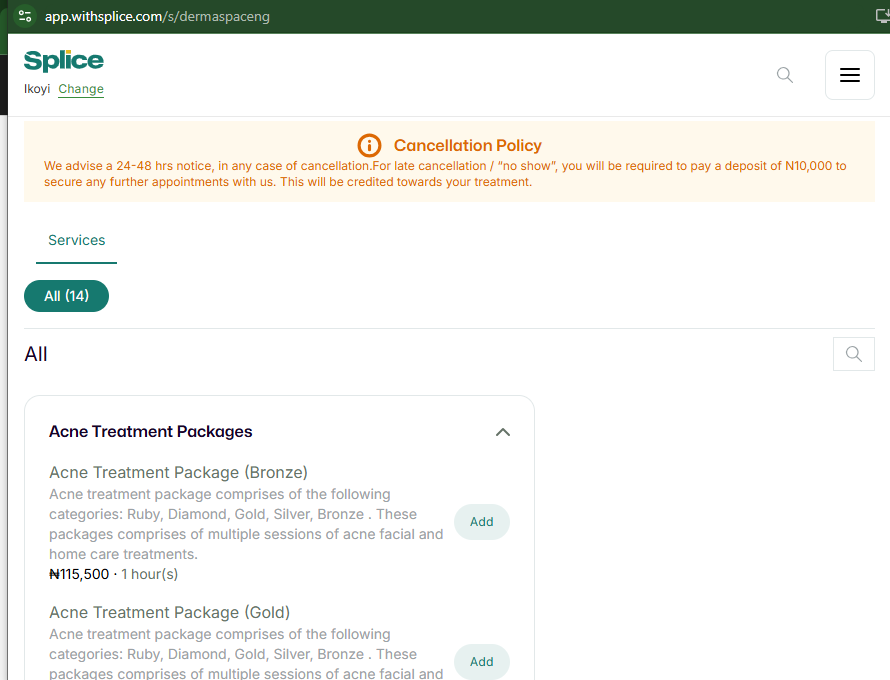
It will also handle customer information, manage staff schedules, track product inventory, simplify payment processes, and provide insight into your salon business, all in one place.
Step 6: Recruit hair salon staff
Given how personal hair salon services are, you need the best hands on deck. Take your time to employ staff; ensure they are equipped to provide excellent customer service.
The people who handle the different aspects of your hair salon determine whether it succeeds or fails.
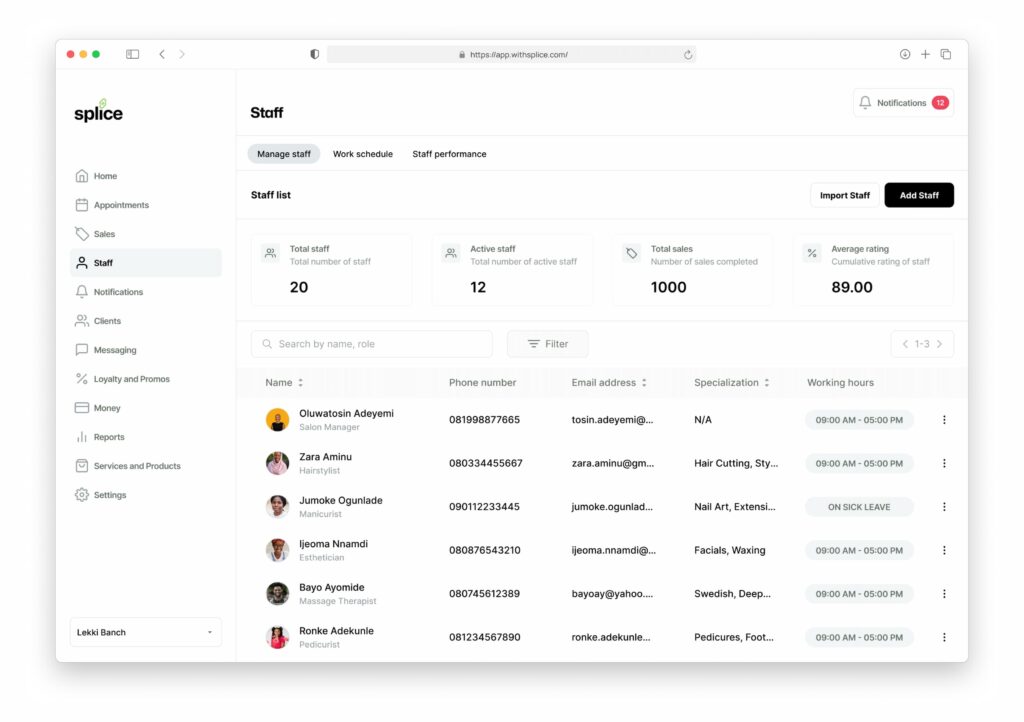
Provide ongoing training so your hairstylists can keep up with beauty trends, techniques, and technologies. Also, reward and motivate your staff too. Your hair salon will be built around them; it’s crucial to ensure they are comfortable. To boost efficiency, you can use Splice to manage their schedule.
Step 7: Create a price list
Deciding how much to charge for your hair services can be challenging, especially since you’re just starting out. However, researching your competition — going to their establishment, looking them up on social media, and visiting their websites — can give you an idea of what to charge.
You can also consult your business plan, which should contain a section on competitors’ research. If you’ve yet to draft your plan, the Splice hair salon business plan template in “Step 2” of this article will help you get started.
Once you settle on prices, list all the products and services your hair salon provides, complete with prices. Make the physical copies available in your establishment while you share digital copies on all your marketing platforms, including websites and social media.
Step 8: Create a marketing strategy

Before you open up a hair salon, it’s advisable to have some customers that will cover your overhead.
But you still have to promote your salon to reach new people you can convert to customers and ultimately retain, using viable marketing techniques.
Here are some tips for marketing your hair salon in Nigeria:
- Install signboards. Put up as many signboards as necessary, including one in front of your salon to announce that it’s now open.
- Print flyers: Share flyers to invite people to check out your shop. You can also leave them at malls, cinemas, supermarkets, and other establishments people frequent.
- Build an online presence. Open accounts on various social media platforms (e.g., Facebook and Instagram) and set up your website to utilise search engine optimisation (SEO). Post relevant content regularly and engage with your audience. You can also explore email marketing. Also, set up and optimise your Google Business Profile (formerly Google My Business).
- Partner with local brands. Collaborating with other businesses in your community will help broaden your reach and build a reputation for your brand in the area.
- Host events. Host an event to launch your hair salon to garner awareness.
- Create loyalty programs. Turn first-time customers into business evangelists through customer loyalty programs like referral discounts and special promos.
You can use Splice software to automate and manage your loyalty programs.

Conclusion
Proper planning can go a long way to ease the process of opening your hair salon, setting it up for success. This article on how to set up a hair salon in Nigeria offers you a step-by-step process for starting your own business, from registering your business to developing marketing techniques to drive traffic.
As you begin your hair salon business journey, let Splice help you automate your business operations.


