

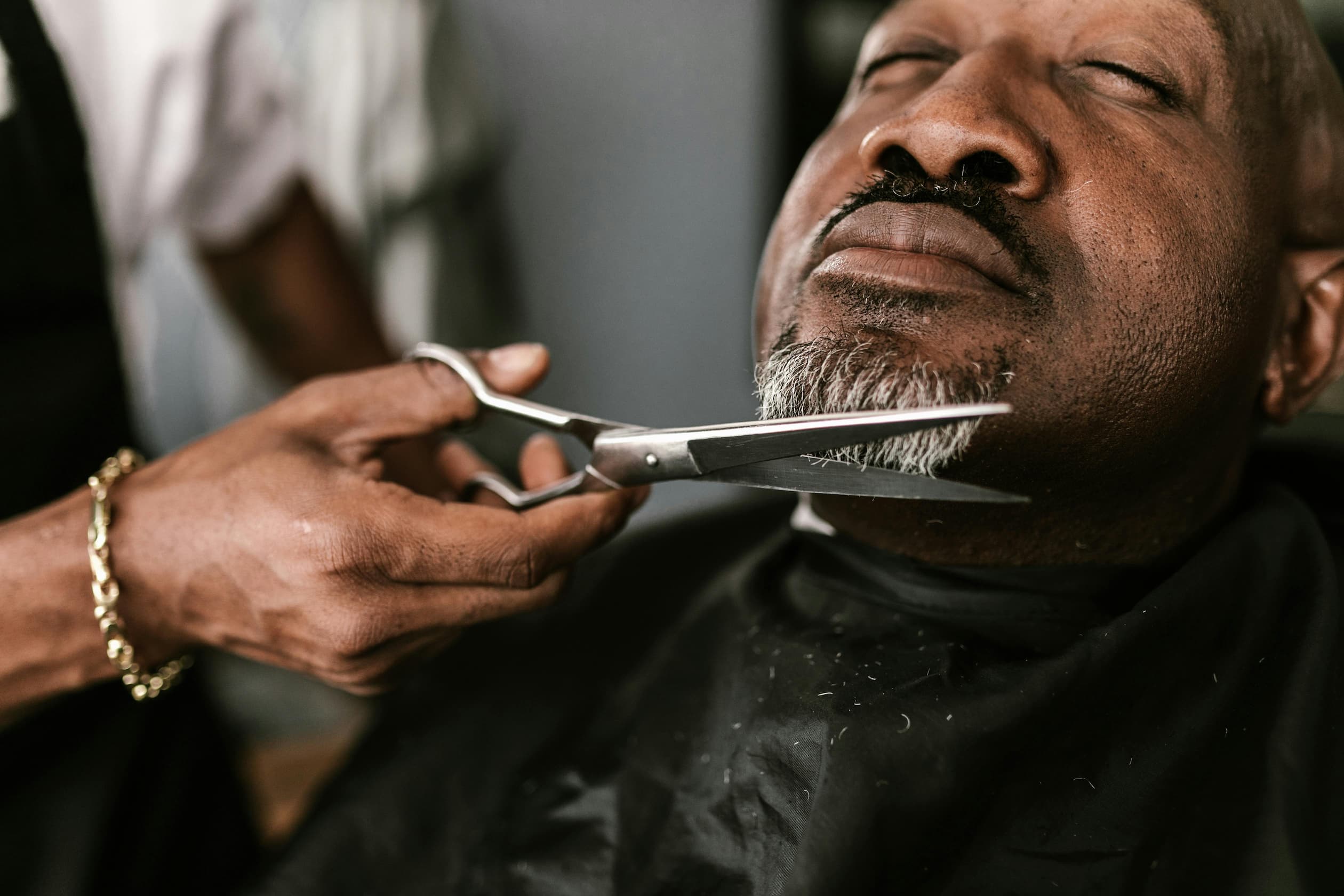
Step into any barbing salon and you’ll notice that it’s more than just the clippers buzzing or the scissors snipping. There’s a rhythm, a culture, and even a language that ties everything together. From the way a barber describes a fade to how they talk about products, words matter as much as the tools in hand.
Every industry has its jargon, and barbering is no different. The right vocabulary helps you train staff effectively, communicate with clients without confusion, and negotiate confidently with suppliers. It’s what separates a makeshift shop from a professional salon.
That’s why we’ve created this glossary. Think of it as your cheat sheet to barbering terms. Use it to sharpen your professionalism, boost your credibility, and assure your clients that they’re in the hands of an expert.
65+ terms every barbing salon owner should know
For ease, we’ve broken them down into five simple groups:
- Barbing salon styling, grooming, and cutting techniques.
- Barbing salon tools, equipment, and accessories.
- Barbing salon hair and beard care products.
- Barbering business and operations.
- Barbing salon roles.
Barbing salon styling, grooming, and cutting techniques
- Afro: A natural hairstyle where curly or kinky hair grows out around the head in a rounded shape.
- Beard dyeing: The practice of colouring the beard, either to cover grey hairs or for style/fashion.
- Beard shaping: Sculpting and trimming the beard to achieve a defined, clean style that suits the face.
- Beard trim: A shorter, maintenance-focused trimming of facial hair to keep it neat.
- Buzz cut: A very short, uniform haircut achieved with clippers.
- Crew cut: A short style where the sides and back are cut very short, while the top is kept slightly longer and tapered.
- Fade: A haircut where the hair gradually transitions from longer on top to very short or skin-close on the sides and back.
- Full beard: A beard that covers the chin, cheeks, and neck fully with minimal shaping.
- Goatee: A beard style that includes hair on the chin, while the cheeks are kept shaved.
- Hard part: A clean line shaved into the hair with clippers or a razor to create a sharp parting.
- Line-up/shape-up: A style where the natural hairline is outlined with clippers or razors to create sharp, defined edges.
- Mohawk: A bold style where both sides of the head are shaved, leaving a strip of longer hair running from the front to the back.
- Neckline maintenance: Keeping the neckline clean and well-defined to enhance the beard and haircut appearance.
- Razor Fade: A fade haircut where the sides and back are shaved with a straight razor for an ultra-clean finish.
- Shave: The complete removal of hair (scalp or face) with clippers or a razor.
- Sideburns: Strips of hair grown down the sides of the face in front of the ears.
- Skin fade: A fade that blends hair completely down to bare skin.
- Taper: A gradual reduction in hair length, typically around the sides and back of the head.
- Taper Fade: A combination of tapering and fading, blending the hair seamlessly from longer on top to skin at the neckline.
Barbing salon tools, equipment, and accessories
- Barber chair: A specially designed chair with adjustable height and reclining features, built for client comfort during haircuts and shaves.
- Cape: A protective cloth draped over the client to prevent cut hair, water, or products from getting on their clothes.
- Clippers: Electric hair-cutting tools with detachable guard sizes used for most short hairstyles, including fades and buzz cuts.
- Disinfectant Jar: A container filled with disinfectant solution (like Barbicide) used to sanitise combs, scissors, and small tools.
- Guard: A plastic attachment placed on clippers to control how much hair is left. For example, a #1 guard leaves hair very short, while a #4 leaves it longer.
- Hot towel machine: An appliance that warms and moistens towels, commonly used before shaving to soften hair and open pores.
- Neck duster: A soft-bristled brush used to remove loose hair from the client’s neck, face, and shoulders after a cut.
- Razor (straight or safety): A blade tool used for close shaves, sharp hairline detailing, or designs. Straight razors are traditional, while safety razors have a protective guard for safer use.
- Shears/scissors: Precision cutting tools used for detailed work, trimming, and texturising hair where clippers aren’t ideal.
- Splice: An all-in-one salon management app that helps owners handle bookings, payments, client records, inventory, staff scheduling, and reminders in one place.

- Towel: Typically used warm during shaves to soften facial hair and relax the skin. Also used dry to wipe excess product or hair.
- Trimmers: Small electric cutters designed for precision detailing, edging, and trimming beards, sideburns, and necklines.
Barbing salon hair and beard care products
Here’s a breakdown of the essential ones you’ll find in barbing salons:
Hair styling products
- Hair cream: Lightweight product for natural hold, moisture, and texture.
- Hair gel: Creates firm hold and shine, commonly used for spiky or sleek styles.
- Hair mousse: A foamy product that adds volume and shine.
- Hair spray: Used to lock styles in place for long-lasting hold.
- Hair wax: Offers flexible hold with a matte or low-shine finish; allows re-styling.
- Pomade: Provides a slick, shiny look with medium to strong hold.
Hair and beard cleansing and conditioning
- Beard conditioner: Softens and detangles beard hair while hydrating the skin beneath.
- Beard wash/shampoo: Specifically formulated to cleanse facial hair without drying the skin.
- Conditioner: Softens and detangles hair while moisturising.
- Shampoo: Cleanses hair of dirt, oils, and product buildup.
Beard grooming and styling
- Beard balm: Styles and conditions the beard while providing light hold.
- Beard growth oils/serums: Marketed to promote beard thickness and growth.
- Beard oil: Moisturises the skin under the beard and softens beard hair; often scented.
- Beard serum: Lightweight formula that adds shine and conditions without greasiness.
- Facial hair dye: Colours beards and moustaches.
- Moustache wax: Firm wax used to style and hold moustaches in place.
Shaving and post-shave care
- Aftershave: Applied post-shave to disinfect and refresh the skin.
- Aftershave balm: Hydrating and soothing alternative to liquid aftershave.
- Pre-shave oil: Applied before shaving to soften hair and reduce razor drag.
- Shave gel: A transparent alternative to cream, allowing more precision.
- Shaving cream: Creates a cushion between skin and razor for a smoother shave.
- Shaving soap: Traditional soap used with a brush to create lather.
- Styptic pencil: Stops minor bleeding from small nicks and cuts.
- Talcum powder: Absorbs moisture, reduces irritation, and leaves a fresh finish.
Barbering business and operations
- Appointment booking: The process of scheduling clients in advance, either manually or through a digital booking system like Splice.
- Booth rental: A business model where barbers rent a chair or station in a salon and operate independently.
- Break-even point: The stage at which total revenue equals total costs, meaning the business is neither losing nor making a profit.
- Commission: A payment structure where barbers earn a percentage of the revenue they generate, often used in retail sales or services.
- Consultation: The process of assessing a client’s needs and preferences before starting a haircut or grooming service.
- No-show: A client who books an appointment but fails to turn up without notice.
- Overhead: The ongoing business expenses, such as rent, utilities, staff wages, and supplies that keep the salon running.
- POS (Point of Sale): The system used to process payments, track sales, and manage transactions.
- Retail sales: Selling hair or beard care products (e.g., pomade, beard oil) directly to clients as an additional revenue stream.
- Walk-in: A client who comes into the salon without an appointment and is attended to if time and staff are available.
Barbing salon roles
Every successful barbing salon relies on a team. Here are the key roles you’ll come across:
- Apprentice: A trainee barber learning the craft under the supervision of a licensed barber or master barber.
- Barber: A trained professional specialising in cutting, styling, and grooming hair, beards, and moustaches.
- Receptionist/front desk: The staff responsible for greeting clients, managing bookings, and handling inquiries.
- Salon manager: Oversees the day-to-day operations of the barbing salon, including staff scheduling, inventory, finances, and customer service.
Conclusion
Barbering is an art, but it’s also a business, and both depend on clear communication. Knowing the right terms doesn’t just make you sound professional; it helps you train your staff, guide your clients, and run your salon with confidence.
Think of this glossary as your cheat sheet: a quick reference to sharpen your expertise, earn client trust, and create smoother day-to-day operations. Share it with your team, use it during consultations, and revisit it whenever you need a refresher.
The more fluent you are in the language of barbering, the more you’ll stand out, not just as a barber, but as a barbing salon owner who understands the craft, the business, and the clients you serve.


