


Slow periods will come. When the economy dips, beauty appointments become the first thing people cut. After the December rush, when January hits, clients suddenly “don’t have money.” When the rains arrive, nobody wants to leave the house.
Every salon and spa goes through it. The question is what you do when it happens.
Most owners wait it out: reduce staff hours, pause spending, and hope next month is better. Some do nothing at all.
But the salons and spas that grow year after year take advantage of slow periods to fix what’s broken, strengthen what’s weak, and set themselves up to win when demand returns.
Ultimately, slow seasons can either become another problem to survive or an opportunity to prepare.
5 ways you can take advantage of slow periods
1. Understand what’s actually slowing you down
You can’t fix what you don’t understand. Before you do anything, you need to know what you’re actually dealing with. Not all slow periods are the same.
Sometimes it’s external: the economy is tight, new competitors have entered the market, or it’s simply a quiet time of year.
Other times it’s internal. Your prices have crept up, your visibility has dropped, or clients have quietly stopped requesting certain services.
Look at your booking patterns. Which services dropped? Which days are emptiest? Which client types stopped showing up?
The answers tell you whether you’re dealing with a timing issue or a business issue, and each requires a different response.
Splice‘s reports and booking data give you exactly the visibility you need to start asking the right questions.

2. Fix the gaps in your operations
Slow periods have a way of revealing what busy seasons hide.
When clients are flooding in, a disorganised booking system is an inconvenience. Idle time between appointments feels manageable. Inconsistent service durations are easy to overlook.
But when things slow down, these inefficiencies become impossible to ignore.
Use this time to clean up your operations:
- Audit your booking system and close the gaps.
- Standardise how long each service takes so your schedule stops leaking time.
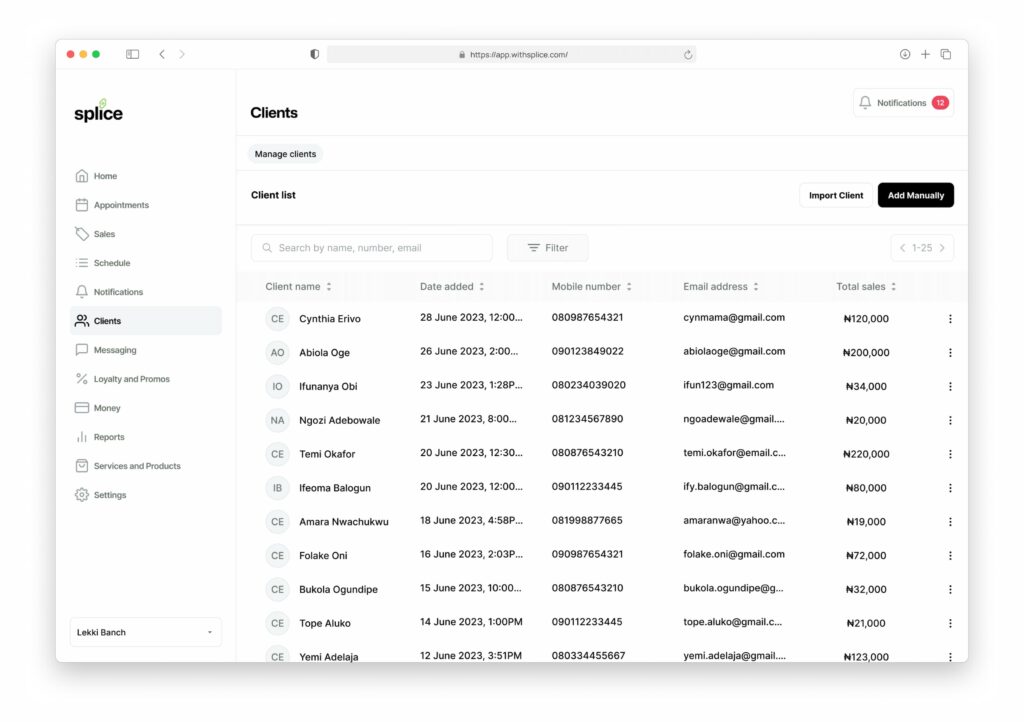
- Make sure your client records are organised and up to date, not scattered across WhatsApp threads and notebooks.
When the busy season returns, and it will, you want a business that can handle the volume without breaking down. Splice’s management tool makes this easier to build.

3. Focus on retention
Before you spend all your energy chasing new clients, look at the ones you already have.
Most slow periods aren’t purely a demand problem; they can be a retention problem. Clients don’t always leave because they found somewhere better. They get busy, they delay, they forget. And if you’re not following up, that silence becomes lost revenue.
Reach out to clients who haven’t visited in a while. A simple, personalised message goes a long way to remind them you exist and give them a reason to come back. A small return incentive, a limited-time offer on a service they love, or even a thoughtful “we miss you” message can be enough to bring them back.
Splice’s CRM and automated follow-ups make this effortless, so no client quietly slips away without you noticing.
4. Increase visibility
Less demand doesn’t mean zero interest. People are still scrolling, still noticing, still making mental notes about where they’ll go when they’re ready to spend.
If you go quiet during slow periods, you lose that window entirely.
Stay visible:
- Post consistently. Share results, show behind-the-scenes moments, let happy clients speak for you.
- Run simple bundles or offers that make the decision to book easier.
- Promote services that usually get overlooked during busy periods. Slow periods are often the perfect time to introduce clients to something new.
- Make booking easy by placing your booking link across your social media profiles and website

Visibility now is bookings later. What people see from you today shapes whether your name is the one they think of when they’re ready.
5. Upskill and improve your offering
When the appointments thin out, the calendar finally has room for something important — getting better.
- Train your staff.
- Test a new service you’ve been thinking about adding.
- Work on the small details of the client experience that always get deprioritised when you’re busy: the consultation process, the ambience, the follow-up after a visit.
Growth doesn’t only happen when you’re fully booked. It happens in the quiet moments when you’re sharpening your skills, expanding what you offer, and raising your own standard.
Conclusion
Every salon and spa slows down at some point. That part isn’t in your control. What is in your control is what you do with that time.
The most successful beauty businesses do more than weather slow periods; they use them. They analyse what’s working and what isn’t. They fix their operations, reconnect with existing clients, stay visible, and get better.


