



If you’re like most salon and spa business owners, you joined the beauty industry out of passion. Now, that’s completely normal — loving what you do is essential for success in the beauty industry, especially in Nigeria.
But it’s not enough. Running a salon business also means keeping an eye on the numbers to ensure your finances are in order. To stay profitable, you must track all your salon’s expenses and make informed decisions based on the data.
While this can be challenging, we’ve created a guide to help you better understand your salon or spa expenses and maintain profitability.
Master your salon’s finances

Cash flow is the lifeblood of your beauty business; It’s the money coming in and going out of your salon or spa. You need more money flowing in than out to stay profitable.
Sounds simple, right?
But here’s where many salons and spas fail: they only focus on income (inflow).
Tracking your revenue without monitoring your expenses gives a false sense of security. To truly understand your salon’s financial health, you need to know where every naira goes. That’s where tracking expenses comes in.
Let’s break down the different types of salon expenses you should monitor.
Types of salon and spa expenses
Salon expenses typically fall into two categories: monthly (recurring) and occasional.
Understanding both will help you create a realistic budget and plan for unforeseen costs.
1. Monthly expenses

These are recurring costs that are easier to predict and budget for.
Here’s a list of the most common ones:
- Staff salaries: Your team is likely your biggest expense. If you have several employees, these costs add up quickly. Keep a close eye on payroll and benefits.
- Taxes: Research federal, state, or local tax requirements and set aside money to avoid surprises.
- Rent or lease: Location matters and rent prices reflect that. Business rents are often higher than residential ones, so factor this into your budget.
- Utilities: Essentials like electricity, water, and heating add up.
- Internet: The Internet is a must-have for running a modern salon. From processing payments to managing bookings and promoting your services online, a reliable connection keeps your business running smoothly.
- Salon software and POS systems: These tools help with scheduling, inventory, and transaction tracking. Find one that fits your needs and budget. Splice lets you manage scheduling, reminders, payments and reports all in one place.

- Salon supplies and retail products: Regularly restock items like shampoos, styling products, and retail inventory for sale.
- Cleaning supplies: Stock up on disinfectants, sanitisers, and cleaning tools to keep your space pristine. Cleanliness builds trust and sets the stage for a professional experience.
- Insurance: Business insurance is crucial. Depending on your location and services, general liability insurance typically ranges from ₦50,000 to ₦200,000 per year and the price ranges from ₦30,000 to ₦150,000 per year for property insurance.
- Marketing: Whether it’s social media ads or email campaigns, marketing costs vary. If you use a social media app or run Google Ads, include it in your budget.
2. Occasional expenses

These costs are less predictable but equally important.
- Opening costs: If you’re just starting, you’ll need funds for staff hiring, space setup, and initial marketing.
- Website development: A website is essential for online booking and showcasing your services.
- Equipment upgrades and maintenance: Replacing worn-out tools or upgrading to new technology (e.g., advanced hair dryers, massage chairs, etc.) costs money.
- Training and certifications: Keep your team updated with the latest techniques and trends through occasional workshops or certifications.
- Rebranding: Rebranding efforts to keep your business competitive.
- Repairs and renovations: Unexpected repairs or planned upgrades to maintain the salon’s ambience.
How to cut costs and increase profits in your salon or spa
Tracking expenses is only the first step. Here’s how to optimise your spending:
1. Create a budget
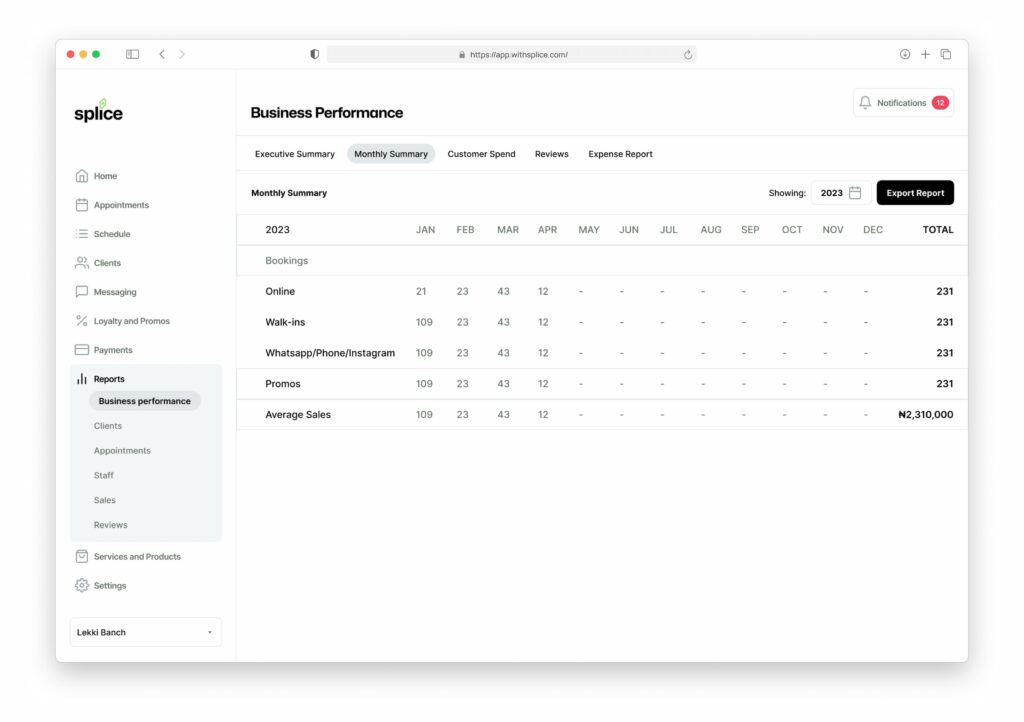
Use your cash flow data to estimate weekly, monthly, and yearly income. Set aside funds for recurring costs like rent, payroll, and utilities. A solid budget keeps you on top of finances and prevents overspending. Splice can help you with up-to-date financial reporting.
2. Involve your team
Your staff often notices wasteful spending first. Host regular meetings to discuss finances, gather feedback, and identify ways to save money.
3. Invest in salon software
Manual operation is time-consuming and prone to errors. Use Splice for appointment scheduling, payment processing, inventory management, and staff performance tracking.
4. Manage retail inventory
Avoid overstocking products that may expire or go unsold and understocking bestsellers. Use Splice to maintain optimal inventory levels, saving money and maximising profits.

5. Leverage downtime
Don’t let gaps between appointments go to waste. Use slow periods to clean your salon, organise inventory, promote your salon online, and bond with the team.
6. Save money
Review your monthly expenses regularly. Are there subscriptions you no longer need? Can you switch to a more affordable supplier? Do you need to buy supplies in bulk to get discounts? Small changes add up.
Conclusion
Running a salon is a labour of love, but staying on top of finances ensures that passion remains sustainable. Tracking your salon expenses helps you make smart financial decisions, ultimately enabling you to increase profitability, retain top talent, and create a positive environment for your staff and customers.


